
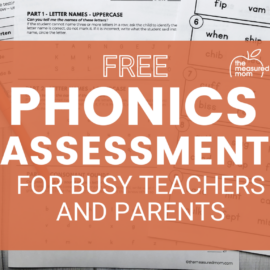
Are you looking for a phonics assessment to help you determine your students' phonics knowledge? I'm sharing a free assessment in today's blog post! Today I'm sharing what I wish I had in my early teaching years ... a phonics assessment! While most of my teaching career was with first and second grade, the first few years I taught a combination class of third, fourth, and fifth graders. Looking back, I ... Read More
Do’s and don’ts for teaching phonics
TRT Podcast#67: Do's and don'ts for teaching phonics Should we teach letter sounds before letter names? Do kids need to learn syllable division rules? We'll examine it all in this episode, the first in our new series about teaching phonics. Listen to the episode here Full episode transcript Related resources What order should you teach phonics skills? Blog post Scope and sequence for teaching phonics ... Read More
Mistakes to avoid when giving phonics instruction
For decades I considered myself a balanced literacy teacher. Of course I believed in phonics instruction. Of course I taught phonics. Or did I? Looking back, I made some pretty big mistakes when it came to phonics instruction. I'm sharing them here in the hopes that I can help you avoid my own mistakes! Phonics Instruction Mistake #1: Not following a strong scope and sequence As a balanced ... Read More
Reaction to Fountas & Pinnell #10: Do Fountas and Pinnell REALLY want teachers to educate themselves?
TRT Podcast#66: Reaction to Fountas & Pinnell #10 - Do Fountas and Pinnell REALLY want teachers to educate themselves? Fountas and Pinnell claim that administrators need to prioritize ongoing professional learning for teachers. But what happens when these teachers find out that what they're learning contradicts Fountas and Pinnell's approach? Listen to the episode here Full episode transcript Related ... Read More
Answers to common questions about decodable readers
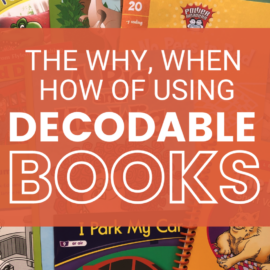
What are decodable readers? Who should be reading them? When can students move on to a different type of text? We'll answer these questions and more in today's post! I've been upfront about this before, but I'll say it again. I wasn't always a fan of decodable readers. Decodable readers (also called decodable books) can be stilted, boring, and nonsensical. The good news is that times are ... Read More
Free decodable books
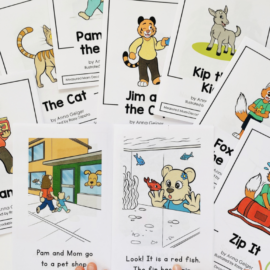
Are you looking for free decodable books to use with your learners in the classroom or at home? You're in the right spot! My experience with decodable books I admit it. As a first grade teacher, I was in the anti-decodable books camp. A big reason for that had to do with my misunderstanding of how children learn to read. I thought kids should use three-cueing as they read leveled books. Now, ... Read More
Response to Fountas & Pinnell #9: Do teachers know best?
TRT Podcast#65: Response to Fountas & Pinnell #9 - Do teachers know best? Fountas and Pinnell tell us that no literacy program can take the place of a teacher's expertise. And they're right! But expertise comes from knowledge, and that knowledge is not innate. In this episode I'll share online courses that will improve your understanding of the science of reading. Listen to the episode here Full episode ... Read More
Why you should include spelling dictation in your phonics lessons
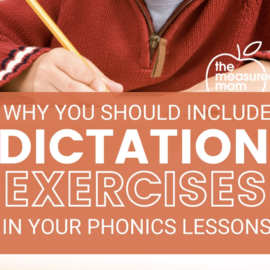
Spelling dictation allows children to apply the sound-spellings you've taught in your phonics lessons. Keep reading to learn best practices for this important activity! When you hear the word dictation, you might visualize an old-school boss dictating a letter to his efficient secretary, who is madly typing on a typewriter. But today I'm talking about spelling dictation. What is spelling ... Read More
Reaction to Fountas & Pinnell #8: Is structured literacy responsive?
TRT Podcast#64: Reaction to Fountas & Pinnell #8 - Is structured literacy responsive? Fountas and Pinnell are proud to describe their approach as responsive; rather than follow a script, they make observations and tailor their instruction to meet individual needs. They insinuate that more structured programs don't allow teachers to adjust for individual students. Is that a correct assumption? Is structured ... Read More
How to use blending lines
Today we're going to talk about blending lines - a powerful, easy-to-use tool that will help your students become masters at decoding! It's the fourth post in our 10-part series about teaching phonics. Blending is the stringing of letter sounds to read a word. There are two main types of blending: *Weird but important note: Some phonics experts use the terms "successive blending" and "final ... Read More